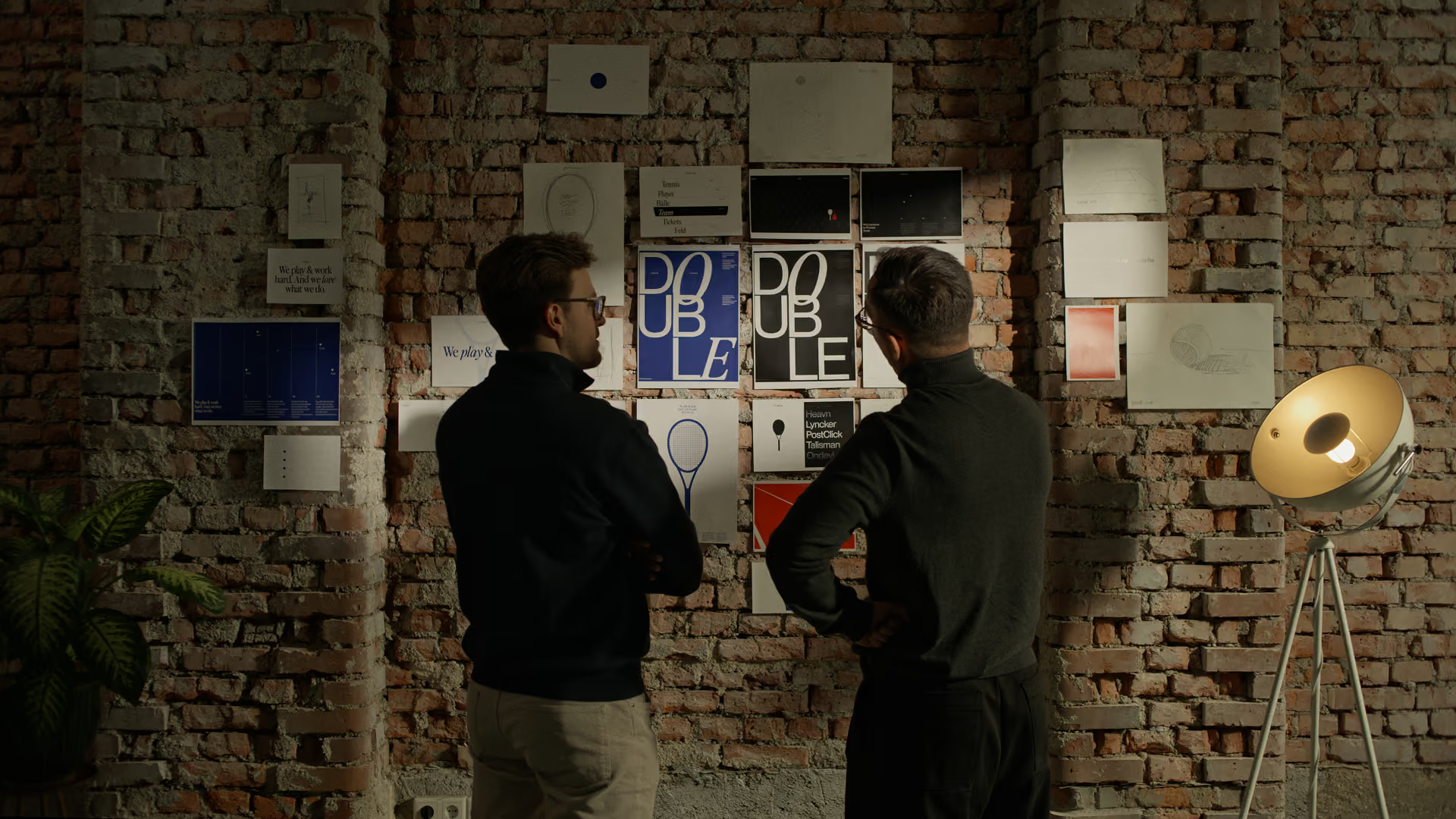
AI in the Web Design Process: Where It Speeds Us Up and Where It Doesn't
Where AI speeds up our process from strategy to SEO, where we deliberately work without it and why experience ultimately decides the quality.

Founder and Head of Development

- We make every decision, AI accelerates every step.
- From strategy workshop to approved wireframe with copy in 1 to 2 weeks. This used to take 4 to 6 weeks.
- Web design remains handcrafted. We do 2D motion with AI, 3D still with specialists.
- In development, AI brings speed and makes things possible that weren't technically conceivable before.
- For the same price, we now deliver more in less time.
How does a web design studio work with AI today? We make every decision, AI accelerates every step. Our creativity and experience guide concept, web design and Webflow development. AI accelerates analysis, research, motion design and coding. In every phase, we tested where AI helps and where it doesn't. Some things surprised us, others disappointed us. Here we openly show where we stand today.
How does a strategy workshop turn into a wireframe so quickly?
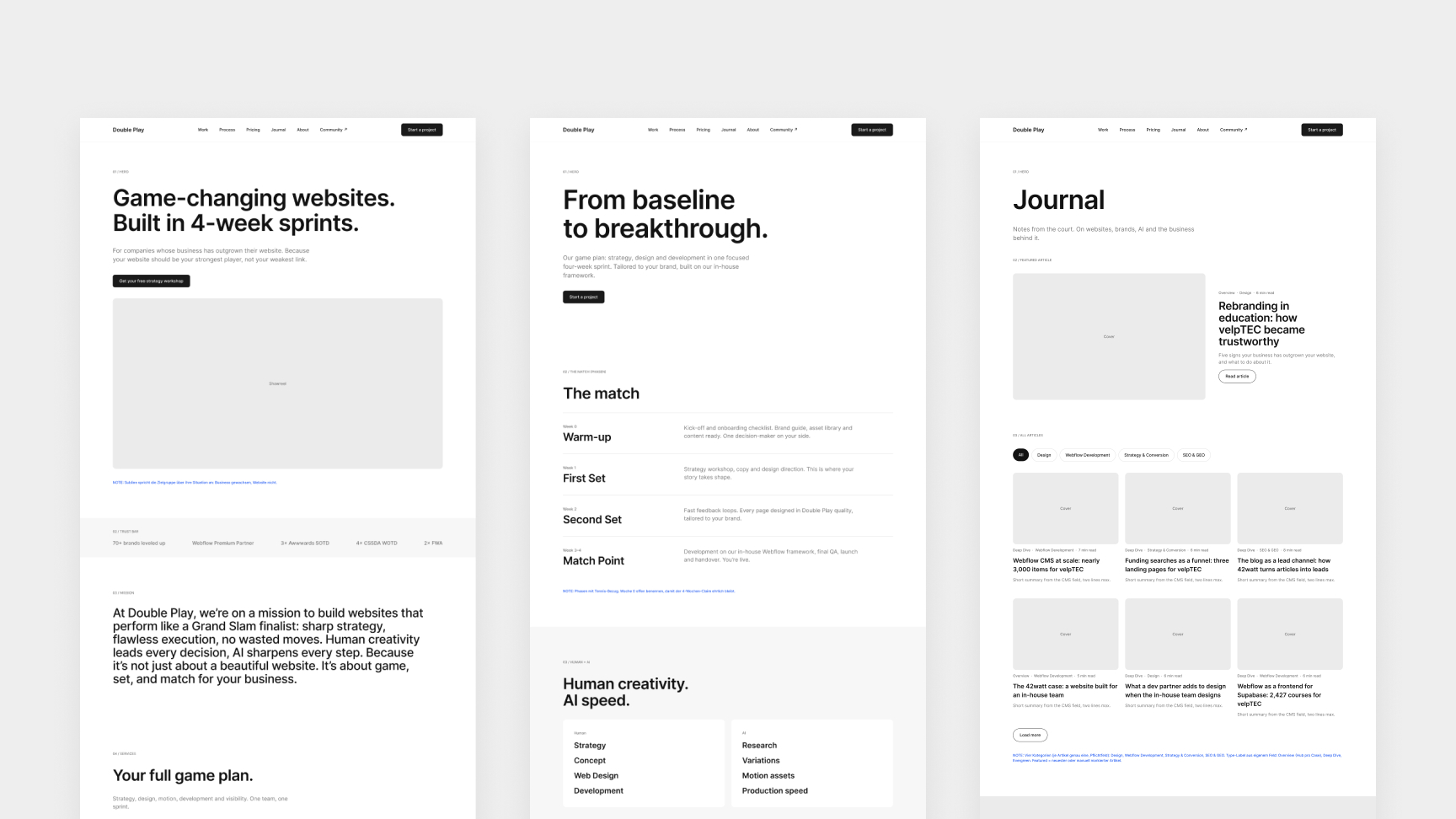
Paul analyzes, AI writes the first draft, we review every line. Even before we work together, we define the sitemap with you in the free Discovery Workshop. In the actual strategy workshop, Paul, our strategist and trained consumer psychologist, works with clear methods: personas, the Value Proposition Canvas, the Limbic Map and positioning models. The workshop is recorded. Afterward, Paul defines the strategic direction and the story your website should tell, and we refine the sitemap if needed.
The transcript and Paul's guidelines go into our own Claude skill. Within 1 to 2 days, this produces a complete wireframe in Figma, including copy. With your feedback, the result is ready after 1 to 2 weeks at most. This step used to take 4 to 6 weeks, depending on the project. Part of the speed is also on your side: we schedule two calls per week, which lets us collect feedback much faster.
One thing matters to us: the wireframe from the skill is the starting point of the iteration, not the result.
Why do we still design websites without AI?
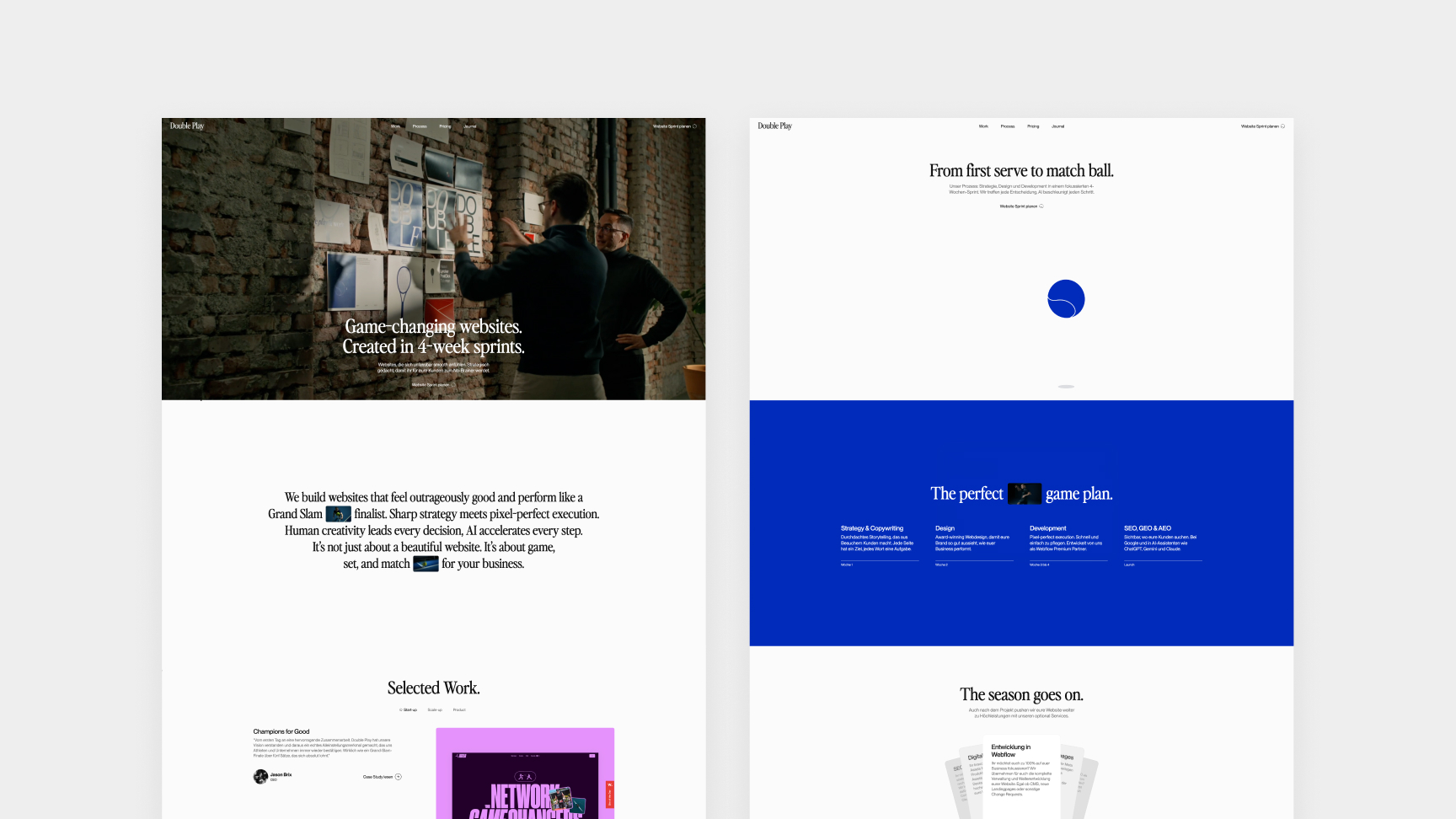
Because AI still reaches its limits when it comes to truly good design. We tested various tools, across several iterations. We weren't really happy with any of the results. That's why Sam, our web designer, designs every website entirely himself. That may change, and we keep testing. But today, the design that carries your brand is made by hand.
Where does AI help with motion design?
With 2D animations we used to have to outsource. A small logo animation, an animated dashboard view or the bouncing tennis ball on our own website: we now build assets like these ourselves with Claude and Figma Motion. In the past, we would have booked an external freelancer for this. Today, it's included in our price.
For 3D, we still rely on real 3D designers. Accurate product renderings need an exact model as a starting point, and AI can't reliably deliver that yet. But first tools like MCPs for Blender show where things are heading. How we use 3D today is covered in the article on 3D product animation.

What does AI change in Webflow development?
Speed, new possibilities and automated content. Three things have changed fundamentally:
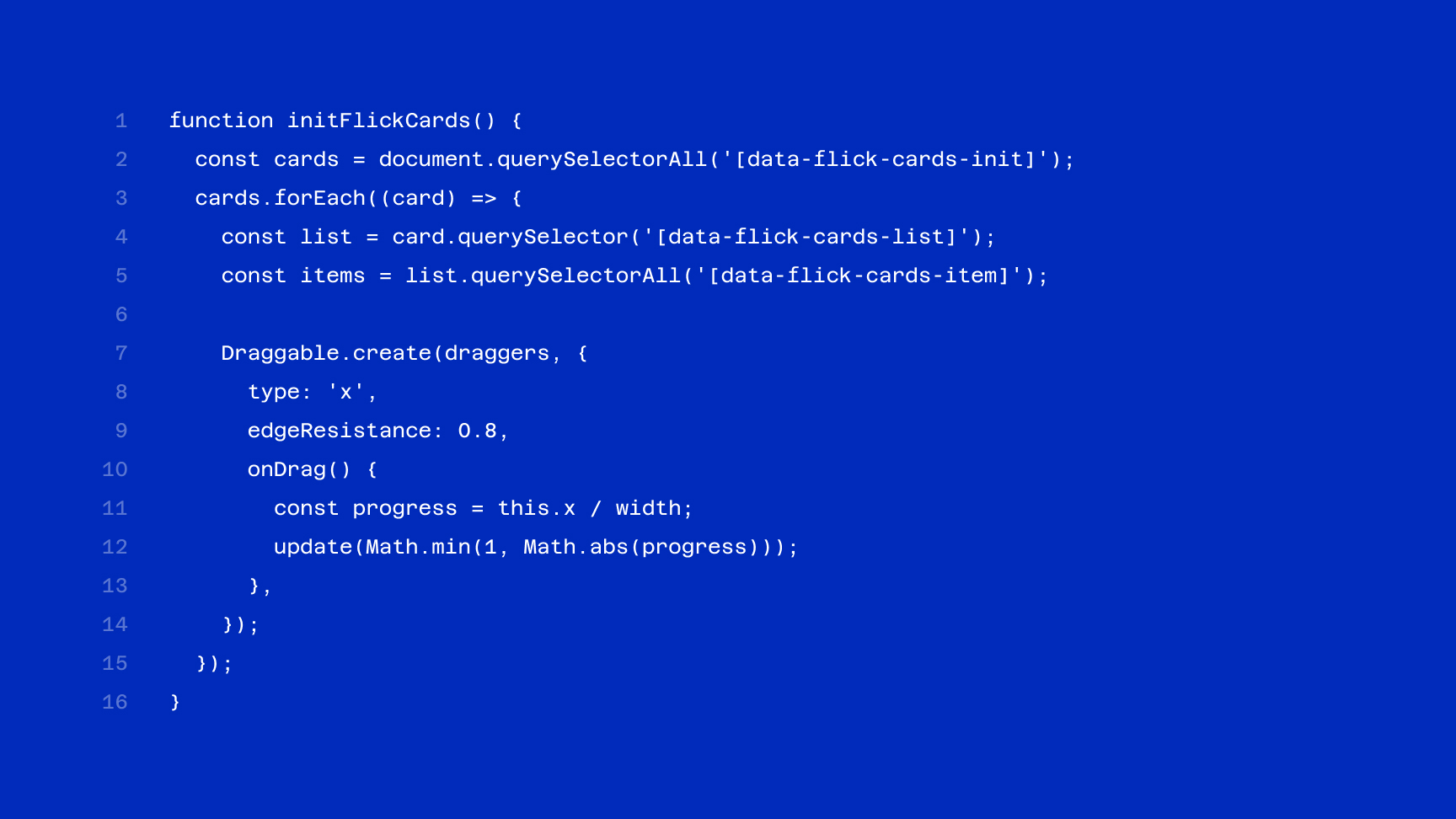
- Animations are built faster and run more reliably. An adaptive navigation that changes its color to match the current section used to be a lot of work with Webflow Interactions. With Claude and a bit of code, it's done in a few minutes today and runs more reliably.
- The horizon of what's possible is much wider. A lot of things that weren't technically conceivable a few months ago, we now build: the website configurator on our contact page or experiments like the swipe game for Taste Labs. We're no longer limited by Webflow or by our own technical knowledge.
- CMS content can be edited automatically. We manage meta data, alt texts or entire articles directly in the Webflow CMS, without touching every field by hand.
The result: our websites get better, and we need less time for them. Still, nothing becomes generic. The results are one of a kind. How we build complex animations without losing performance is covered in this article.
How do we use AI for SEO, GEO and AEO?
With a skill that translates your expertise into articles, not with generated mass content. If you want to use SEO, GEO and AEO strategically, we provide you with our Claude skill. It works with an interview function: you provide the input on topics from your own company, and it turns that into an article with a fitting headline structure, summary, FAQs and meta data. This structure is designed so that Google and AI search engines find and cite your content. Publishing to the Webflow CMS can run fully automatically. With us, though, a human always gives the final approval.
Our own Journal is created exactly this way: every article covers a topic from our projects, with real numbers and experience.

What's in it for you?
For the same price, you get more in less time. We pass on the efficiency we gain through AI: 2D animations are included, wireframes are ready faster, and features that would once have blown the budget are now feasible. That's why we build websites in a 4-week sprint.
Why does experience make the difference in the end?
Because AI is only as good as the person guiding it and reviewing the results. We critically challenge every result, at every step. That's exactly our role as experts: judging whether something is good or needs to be reworked. AI can go from average to extremely good if you guide it the right way. That only works with experience.
Frequently Asked Questions about this topic
Does a website get worse when it's made with AI?
Not if people make the decisions. With us, the web design is created entirely by hand. AI speeds up strategy drafts, 2D animations and code, and we critically review every result before moving on. What matters is who guides the AI and evaluates the results.
Does AI make a website cheaper?
With us, the price stays the same, but you get more in less time. 2D animations we used to book freelancers for are included, wireframes are ready faster, and features that would once have blown the budget are now feasible.
Can you use AI-written articles for SEO?
Yes, if the input comes from you. Articles with real knowledge and real experience from your own company are valuable for Google and AI search engines. Generic mass content without your own input is not.